
Two-thirds (66%) of UK adults expect AI to cut entry-level jobs. Just 6% identified young people from ethnic minority backgrounds among those most at risk — the lowest of any group tested — in new YouGov research commissioned by the Taylor Bennett Foundation
London, 10th June 2026
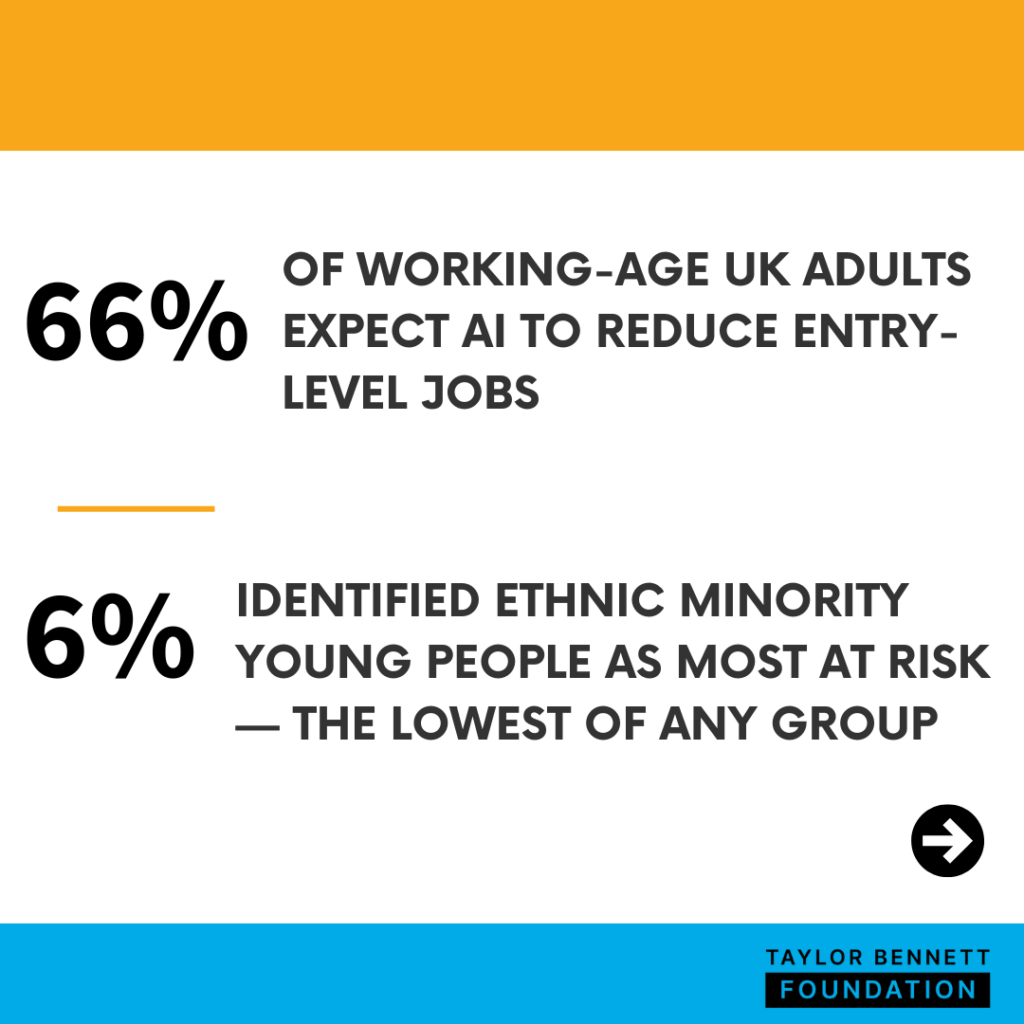
As graduate vacancies fall to their lowest level in years, two-thirds (66%) of working-age UK adults believe AI will reduce entry-level job opportunities for young people, with just 5% expecting it to create more roles, according to new research conducted by YouGov on behalf of the Taylor Bennett Foundation.
That view is even more pronounced among the people closest to the transition: 84% of full-time students expect AI to mean fewer entry-level roles — the highest of any group surveyed. The findings suggest those about to enter the labour market are the most convinced the door is closing on them.
When asked which groups of young people would be most affected by AI, 6% identified those from ethnic minority backgrounds — the lowest figure of any group listed. Disabled young people were named by 12% of respondents, neurodivergent young people by 14%, young people from low-income households by 21%, and those aiming for administrative or clerical roles by 31%.
Koray Camgöz, CEO of the Taylor Bennett Foundation said:
“Two-thirds of the public can see that AI is about to reduce entry-level jobs. What they haven’t seen yet is who will be hit hardest. AI won’t create new inequalities at work. It will widen the disparities that already exist.“
“Entry-level roles are the front door to a professional career. When that door starts to close, the people who already face the steepest climb — and that includes ethnically diverse young people — get pushed furthest back. Without intentional action from employers, the gaps that have always existed at the start of people’s careers will simply get wider.”
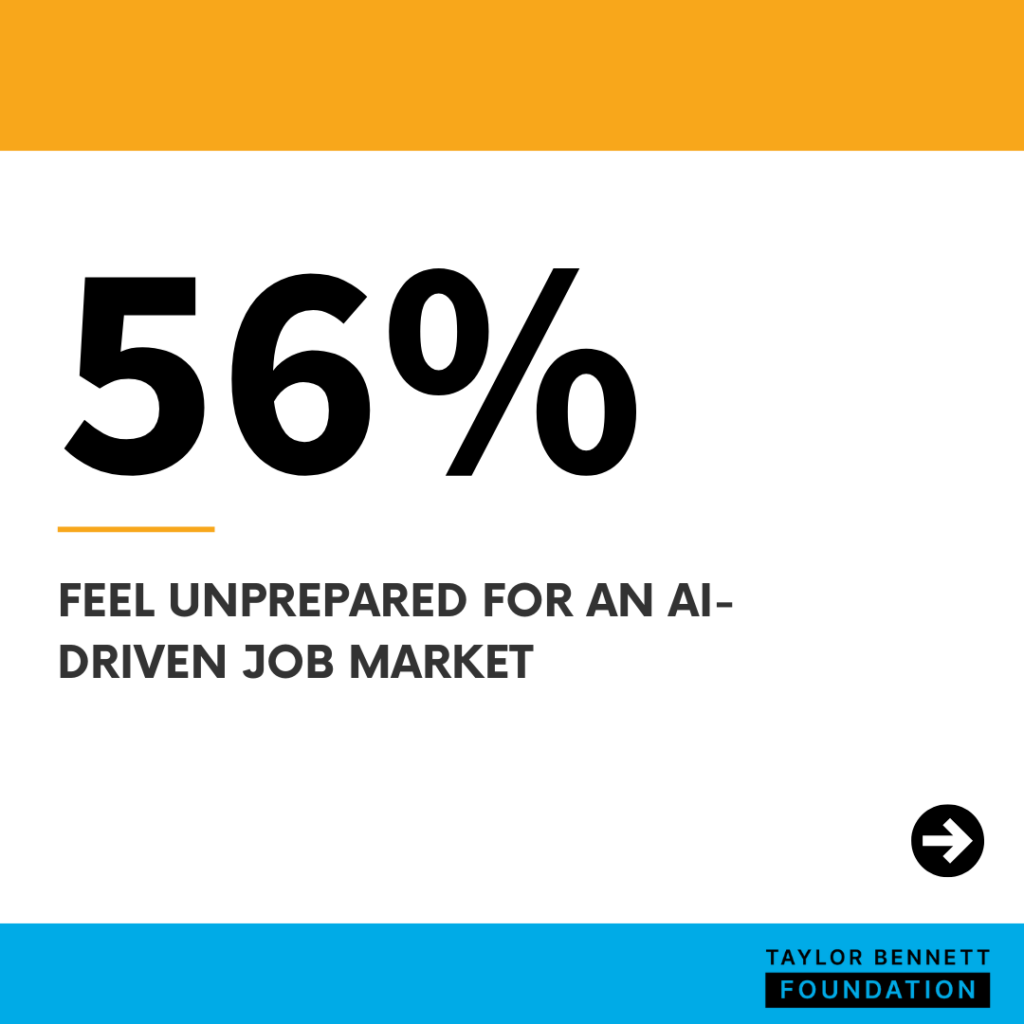
The Taylor Bennett Foundation, which has worked for nearly two decades to increase ethnic diversity in public relations and communications, says the findings reveal a critical blind spot at precisely the moment when the stakes are highest — and is urging business leaders to act now to protect the entry-level pathways AI is most likely to disrupt.
The front door is closing
The 31% of respondents who named administrative and clerical positions as most exposed to AI disruption have identified roles that sit among the insecure, lower-paid forms of work in which workers from ethnic minority backgrounds are already overrepresented. Analysis by the Living Wage Foundation has found that minority-ethnic workers are disproportionately employed in the UK’s most precarious jobs.¹ Research by the Joseph Rowntree Foundation shows that people from Black, Bangladeshi or Pakistani backgrounds are significantly more likely than White workers to be in precarious forms of employment.²
Taken together, the Foundation believes these findings point to a public that has not yet connected existing inequalities to the disruption AI is about to bring. A reduction in those roles does not affect all young people equally: it concentrates pressure on those who already face the steepest climb.
Building what AI can’t replace
Asked which skills will matter most as AI spreads, the public valued human capabilities like adaptability (36%) and communication (29%) alongside technical ones — and it is here the Foundation is focusing its own response. TBF is reshaping its training programmes to build both: fluency with AI tools, and the human skills that set people apart in a room. But those human skills are learned by doing the job, which is why automating entry-level roles away, rather than protecting them, puts the whole talent pipeline at risk.
Koray Camgöz, CEO of the Taylor Bennett Foundation continued:
“Every industry needs to rethink the way it prepares young people for the world of work. Many of the young people we meet at TBF have come through an education system that treats the use of AI as cheating, so they approach it warily. We make a point of helping them become fluent in the tools, because that confidence is now part of being employable. But AI fluency alone isn’t enough.“
“As AI takes on more of the routine work, young people need to prioritise building the skills that are innately human: being present in a room, building trust, speaking with conviction, holding a relationship. We’re reweighting our programmes around both: command of the tools, and the human skills the tools can’t replicate. That’s the shift every employer will have to make.”
Notes to editors
The research was conducted by YouGov on behalf of the Taylor Bennett Foundation. A total of 2,254 UK adults who are not retired were surveyed online between 25–26 February 2026. Data has been weighted to be representative of the UK adult population (aged 18+) excluding those who are retired. All figures, unless otherwise stated, are from YouGov Plc.
¹ Living Wage Foundation, Minority Ethnic Workers Disproportionately Employed in UK’s Most Precarious Jobs. https://www.livingwage.org.uk/news/minority-ethnic-workers-disproportionately-employed-uks-most-precarious-jobs
² Joseph Rowntree Foundation, Ethnicity, poverty and in-work inequalities in the UK. https://www.jrf.org.uk/race-and-ethnicity/ethnicity-poverty-and-in-work-inequalities-in-the-uk
About the Taylor Bennett Foundation
The Taylor Bennett Foundation is an award-winning UK-based charity that inspires young people from Black, Asian and ethnic minority backgrounds to pursue careers in PR and communications. It offers fully paid training, mentoring and internship programmes in partnership with leading consultancies and FTSE 100 companies, and works with employers to build more inclusive workplace cultures. Since 2008, the Foundation has supported more than 1,400 young people.